Tag: East West cultural differences
-
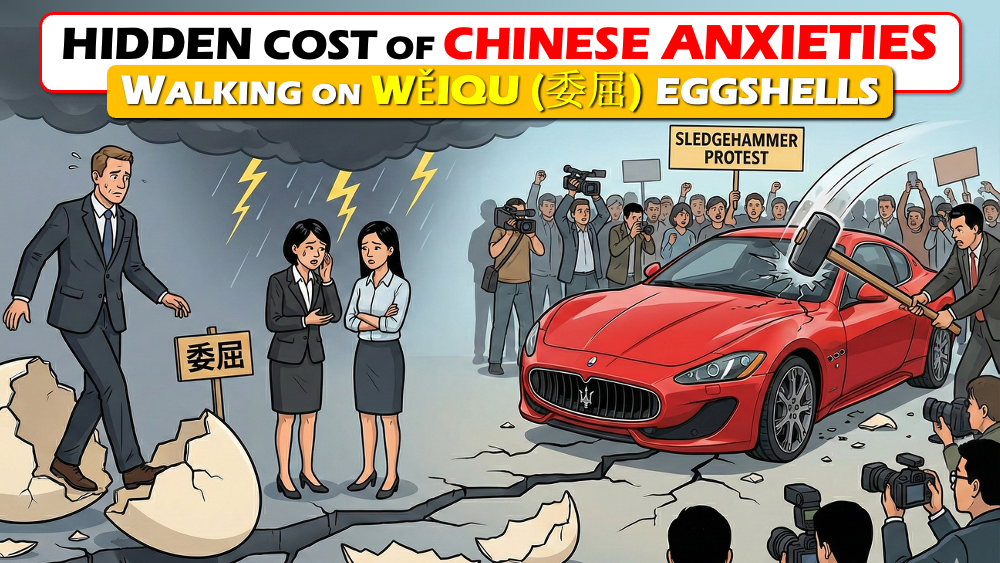
Walking on Wěiqu (委屈) Eggshells: The Hidden Cost of Chinese Anxieties (焦虑 Jiāolǜ)
Pressure doesn’t motivate people in China the way Western leaders expect—it often creates invisible emotional fractures. In Chapter 7, we explore two powerful Chinese emotions that don’t fully translate into English: Wěiqu (委屈) and Jiāolǜ (焦虑). When feelings of being wronged are swallowed to preserve Face, they don’t disappear—they accumulate. And when suppressed long enough,…
-

The Color of Silence: What a “Yellow Lantern” Actually Means for China’s Future
Yellow was once the color of emperors—absolute authority, cosmic order, legitimacy. But in China’s folk psychology, that same color signals something far darker: mourning, endings, and loss. Today, yellow lanterns are appearing quietly alongside Lunar New Year red. To outsiders, they look decorative. To those fluent in Chinese political symbolism, they read like a silent…
-

China’s Iron Rice Bowl Conundrum: Too Young to Remember, Too Indoctrinated to Forget, and Too Enduring Ignore
China’s Iron Rice Bowl didn’t vanish with economic growth—it retreated into psychology. This chapter explores why even young, globally educated Chinese professionals remain deeply risk-averse, and how inherited survival instincts continue to shape behavior, decision-making, and leadership. To move things forward in China, you must first understand why caution still feels like common sense.
-
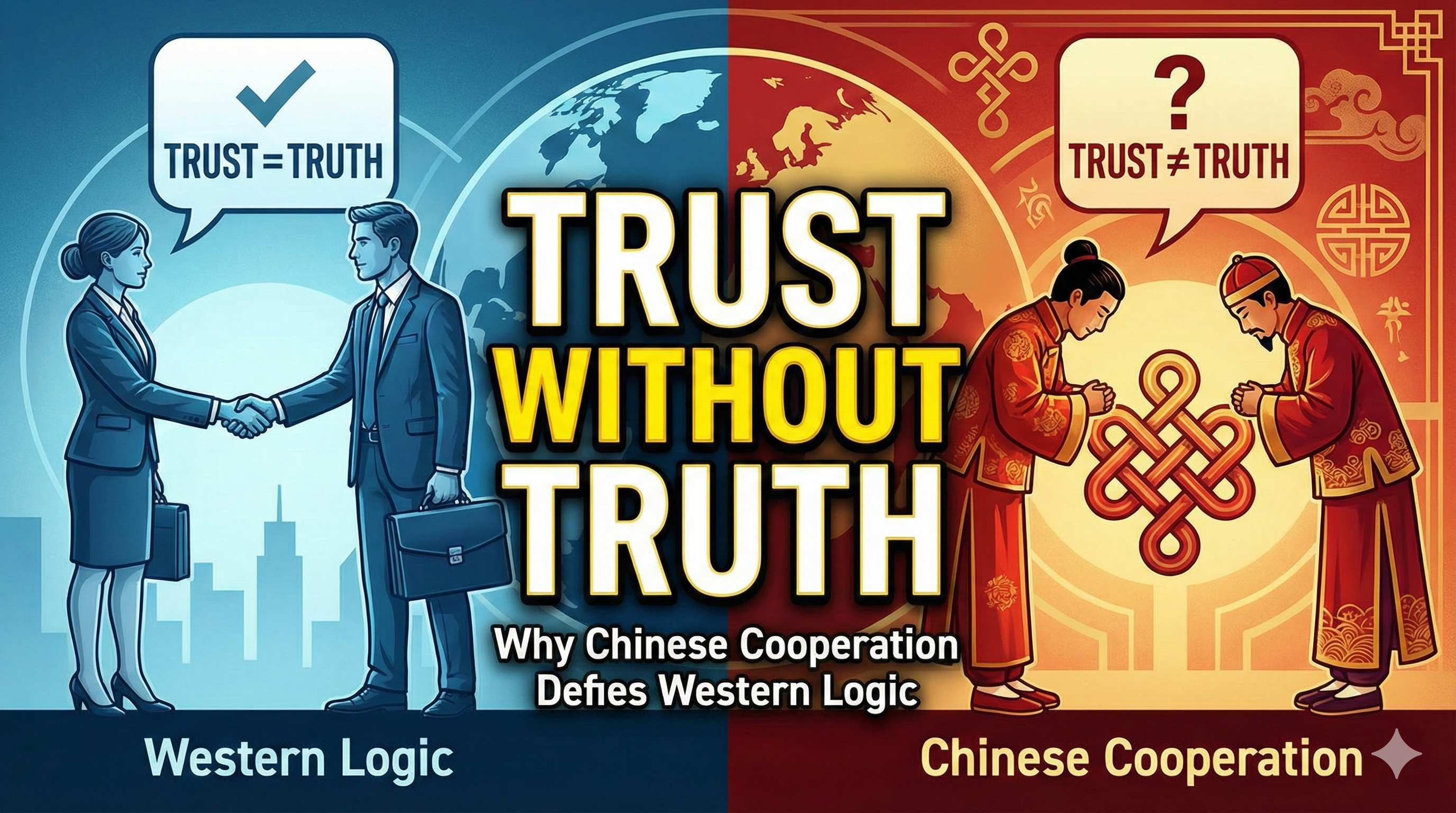
Trust Without Truth: Why Chinese Cooperation Defies Western Logic
One of the most detrimental assumptions foreigners bring to China is the belief that trust and truthfulness are naturally correlated. They aren’t. This article untangles the difficult reality that in China, trust is relational while truth is conditional, explaining why a deeper relationship often makes the literal truth more elusive.
-

What the Happiness Index Can’t Measure in China (But Assumes Everywhere Else)
Global happiness rankings assume that freedom, generosity, and self-expression are universal indicators of well-being. But in China, these concepts are experienced and evaluated through relationships, social balance, and long-term stability—not individual assertion. When Western metrics are applied without cultural context, they don’t just misread China; they reveal the hidden assumptions embedded in how we define…