Category: Chinese Mindset & Guanxi
-

Interpreting Chinese Attitudes In Our Reflections | Xīntài (心态)
Western professionals often misinterpret Chinese behavior because they project their own emotional assumptions onto it. In Chapter 8, we explore Xīntài (心态)—a concept deeper than “attitude”—and uncover how emotions like Wěiqu (委屈) and Jiāolǜ (焦虑) quietly shape decision-making, trust, and reactions to pressure inside the Chinese arena.
-
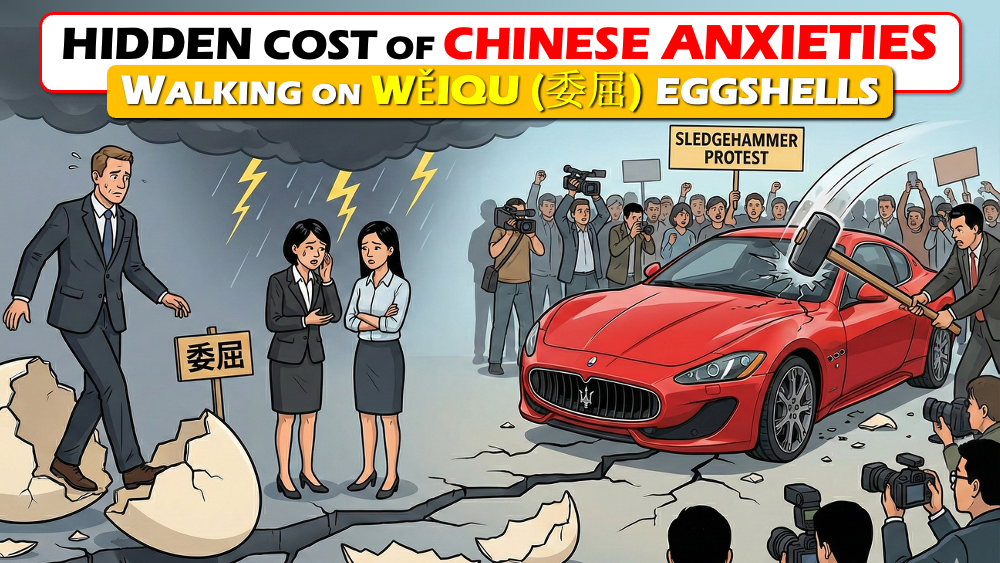
Walking on Wěiqu (委屈) Eggshells: The Hidden Cost of Chinese Anxieties (焦虑 Jiāolǜ)
Pressure doesn’t motivate people in China the way Western leaders expect—it often creates invisible emotional fractures. In Chapter 7, we explore two powerful Chinese emotions that don’t fully translate into English: Wěiqu (委屈) and Jiāolǜ (焦虑). When feelings of being wronged are swallowed to preserve Face, they don’t disappear—they accumulate. And when suppressed long enough,…
-

The Color of Silence: What a “Yellow Lantern” Actually Means for China’s Future
Yellow was once the color of emperors—absolute authority, cosmic order, legitimacy. But in China’s folk psychology, that same color signals something far darker: mourning, endings, and loss. Today, yellow lanterns are appearing quietly alongside Lunar New Year red. To outsiders, they look decorative. To those fluent in Chinese political symbolism, they read like a silent…
-

China’s Iron Rice Bowl Conundrum: Too Young to Remember, Too Indoctrinated to Forget, and Too Enduring Ignore
China’s Iron Rice Bowl didn’t vanish with economic growth—it retreated into psychology. This chapter explores why even young, globally educated Chinese professionals remain deeply risk-averse, and how inherited survival instincts continue to shape behavior, decision-making, and leadership. To move things forward in China, you must first understand why caution still feels like common sense.
-

Giving Face Without Losing Yourself: The Real Ethical Test in China
In China, Giving Face doesn’t mean abandoning your values—it means choosing when and how to express them. This chapter explores why trust does not guarantee truth, why harmony often outranks moral certainty, and how Western instincts around honesty can quietly sabotage guānxì. If you’ve ever felt ethically uncomfortable navigating Chinese relationships, this reflection reframes what…
-
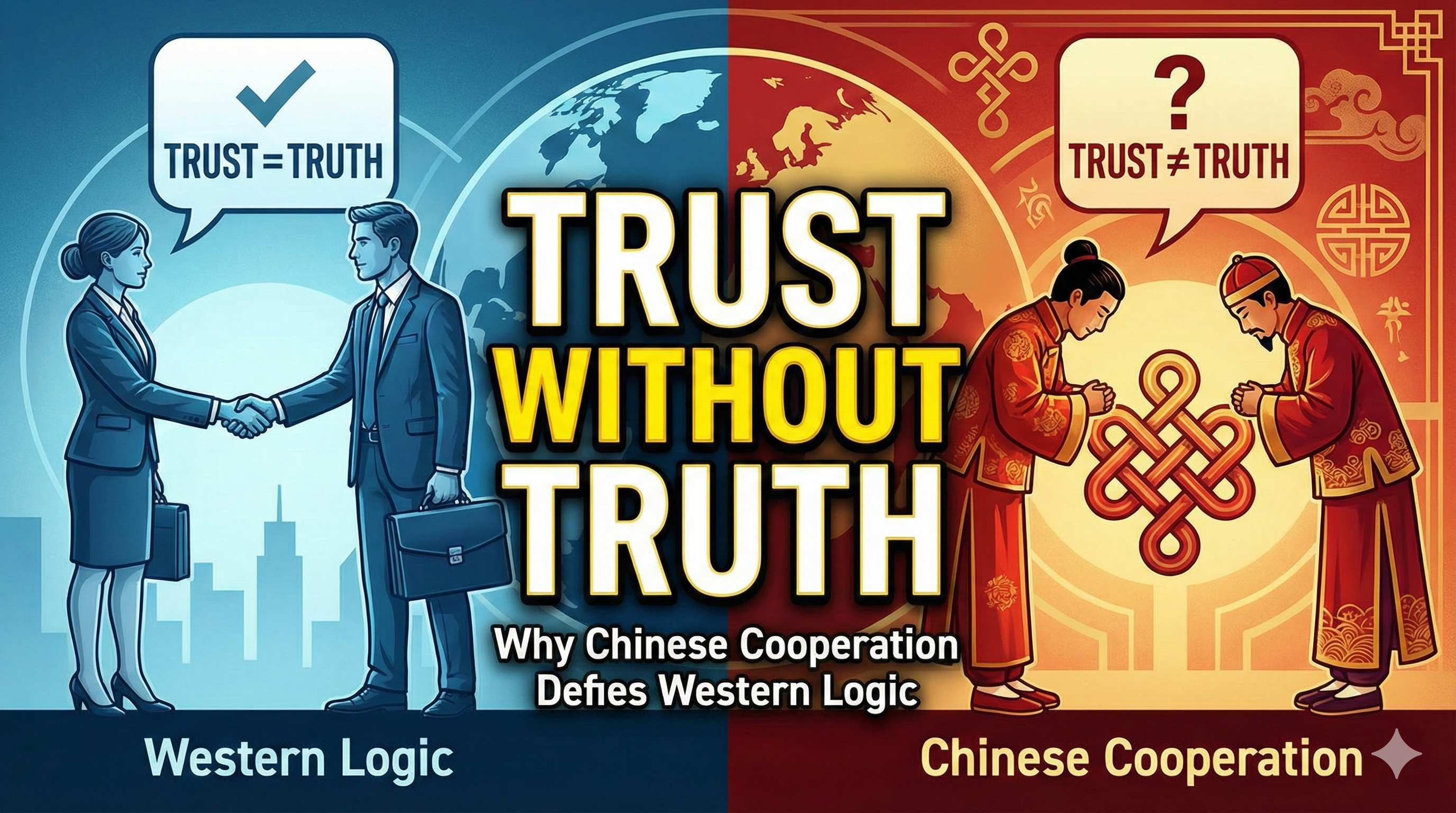
Trust Without Truth: Why Chinese Cooperation Defies Western Logic
One of the most detrimental assumptions foreigners bring to China is the belief that trust and truthfulness are naturally correlated. They aren’t. This article untangles the difficult reality that in China, trust is relational while truth is conditional, explaining why a deeper relationship often makes the literal truth more elusive.
-

What the Happiness Index Can’t Measure in China (But Assumes Everywhere Else)
Global happiness rankings assume that freedom, generosity, and self-expression are universal indicators of well-being. But in China, these concepts are experienced and evaluated through relationships, social balance, and long-term stability—not individual assertion. When Western metrics are applied without cultural context, they don’t just misread China; they reveal the hidden assumptions embedded in how we define…
-
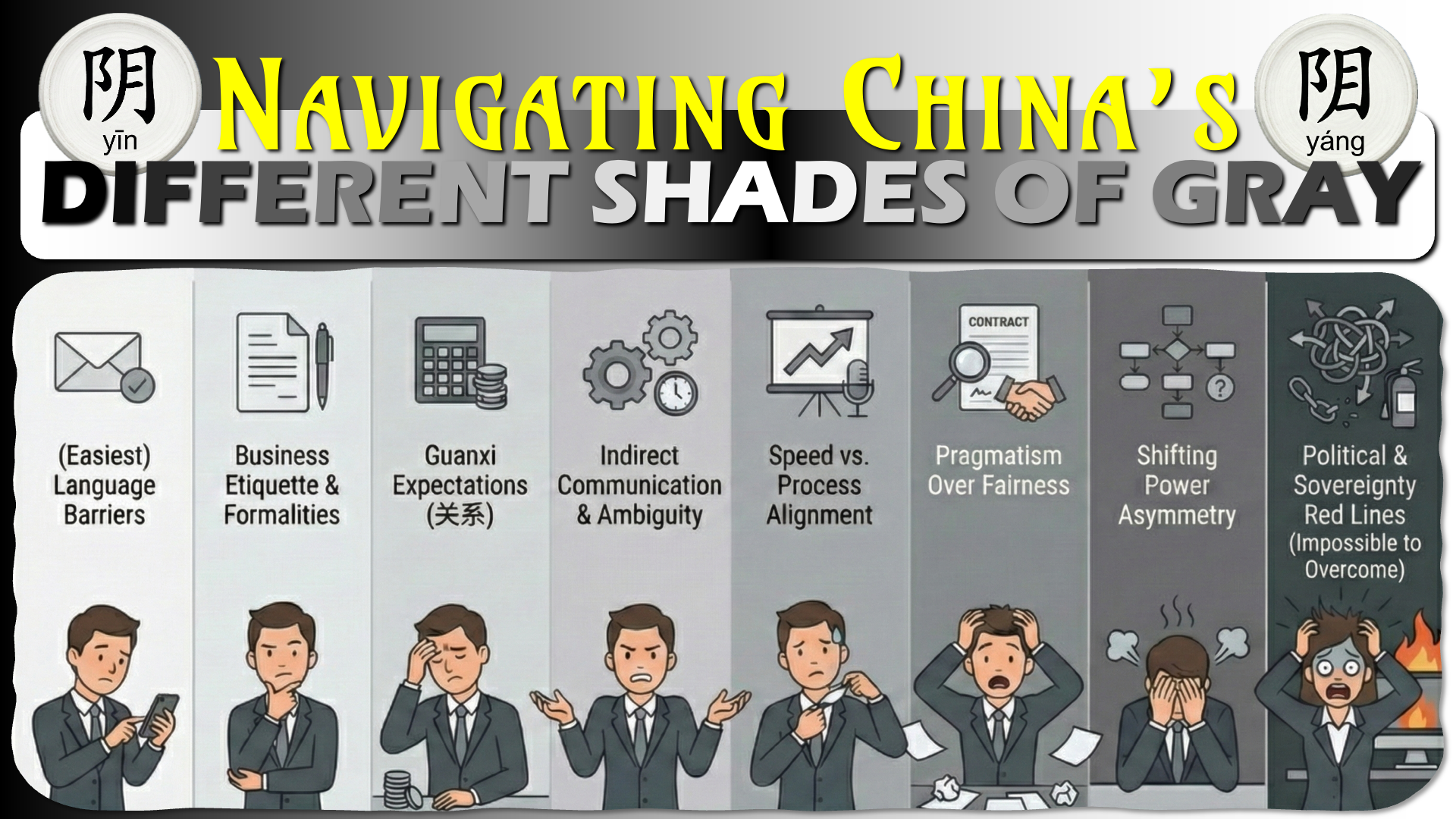
Yīnyáng (阴阳): Navigating China’s Different Shades of Gray
Mastering the “gray areas” is to doing business in China what political correctness is to corporate America: MANDATORY. Yet, Westerners routinely parachute into China expecting success while delusionally ignorant of its gray-zone operating system. This infographic and blog post explore the leadership dilemma of leading a “gray zone” workforce with a black-and-white mindset, visualizing the…
-
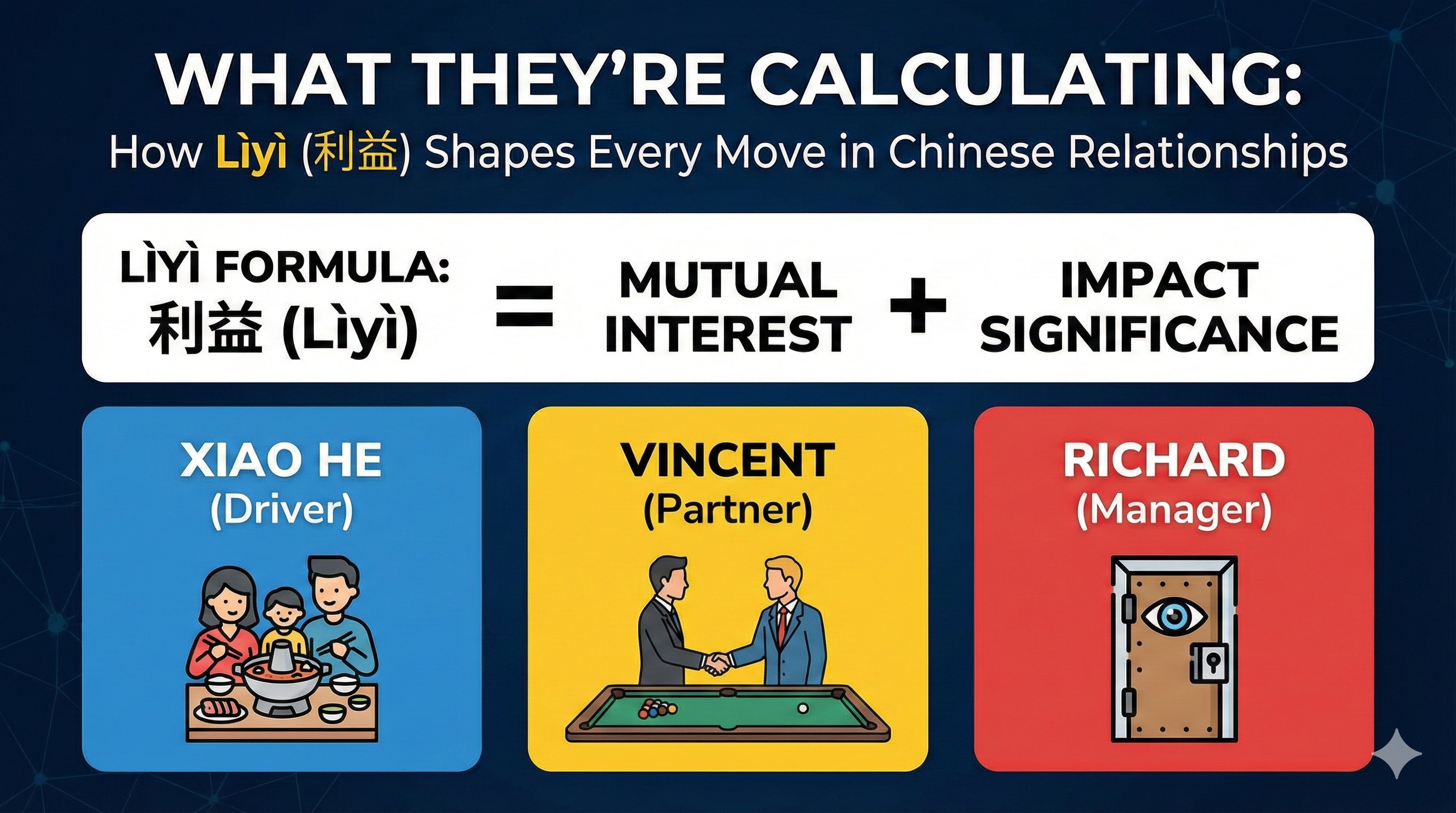
Decoding Chinese Behavior Based on Their Internal Lìyì (利益) Calculus
Chinese behavior isn’t guided by what feels fair — it’s guided by what feels beneficial. To understand how decisions are really made, you must grasp Lìyì (利益): a perceived, personal benefit calculus shaped by pragmatism, guanxi, and evolving relationships. Until you see the world through this lens, Chinese actions may seem inconsistent — but once…
-

The Secret Behind “China Speed”: How a Volleyball Strategy Became a Business Mindset
Most people explain “China speed” with economics or policy. But its roots lie in something far more surprising: a volleyball strategy from the 1980s. This article uncovers how 短、平、快 — short, flat, fast — evolved from athletic brilliance into the mindset driving China’s modern business success.