
Understanding WHAT THEY CONSIDER
“China doesn’t run on what’s fair — it runs on what’s beneficial to the individual.”
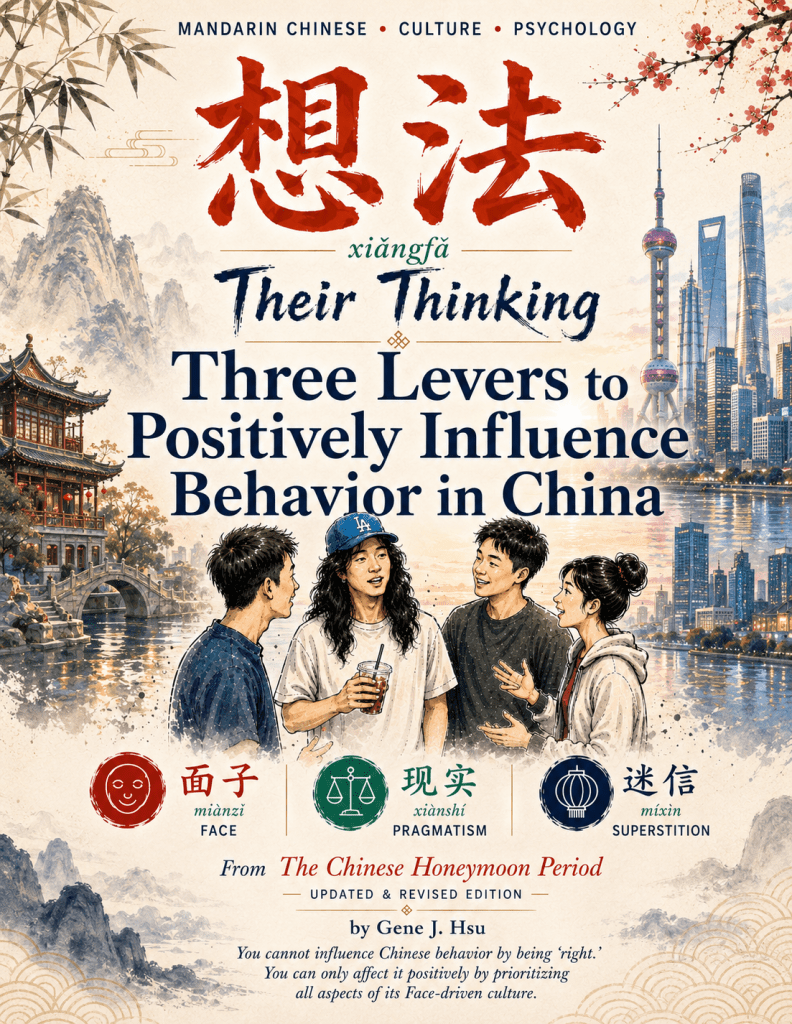
Before you can genuinely understand Chinese behavior — generosity, stubbornness, evasiveness, sudden warmth, sudden coldness — you must realize what pragmatism (现实 xiànshí) means in the Chinese cultural context, and how your Chinese counterparts assess their “perceived personal” benefits (好处 hǎochù).
There are two key words in our practical definition of Lìyì (利益).
- Preceived: Because how Chinese people tend to behave is based solely on how they “perceive” their benefits. What they will actually receive is essentially irrelevant because the continuous exchange of goodwill in Chinese reciprocity means “things are always subject to change.”
- Personal: Chinese pragmatism refers to what is beneficial for the person you are interacting with, and this is where Western assumptions can lead you astray. We assume that if you work for an organization, you are acting in the best interests of the company you represent. That would be the best of both worlds, but when there is a dilemma, personal benefits or Lìyì will take precedence in your Chinese counterpart’s psychology.
It’s helpful to imagine that Chinese people think of every transaction, goodwill exchange, and Face-giving gesture in terms of Lìyì (利益) because, in this reality, Chinese behavior makes perfect sense. Put another way, every meaningful decision runs through a mental, “personal benefit” calculus.
This is how Chinese intuition works.
This isn’t selfishness.
It isn’t greed.
It isn’t even corruption.
It’s the operating system that has kept Chinese society running harmoniously for thousands of years. And until you understand their version of “what makes sense,” your Guānxì might feel like it is deepening, but it ultimately won’t get you where you want to go.
As an exercise, let’s imagine the characteristics of Lìyì, which in Chapter 2 of The Chinese Honeymoon Period is HOW THEY OPERATE. Unlike in the West, where trust builds slowly and predictably, Chinese Lìyì considerations are:
- Dynamic. What your Chinese counterpart perceives as beneficial will evolve continuously, especially as others in the Guānxì network become involved.
- Based on perception, not accuracy. Accept this characteristic to contextualize the cultural differences.
- Influenceable. Your goodwill gestures, Face-giving attitude, and Chinese cultural awareness will influence their perceptions. Therefore, you can alter their Lìyì calculus to influence their behaviors.
Most Westerners ignore these attributes because we assume we’re being evaluated on competence, character, and truthworthiness. But in China, the meaning of these traits is itself a cultural dichotomy.
In the next chapter, we will introduce the DIFFERENT SHADES OF GRAY, a.k.a. Yīnyáng (阴阳), but we’ll analyze it in the context of their cultural psychology.
Interested in this topic? My latest book, Speak Less, Guanxi More, is now on sale, and I am still giving away the entire 114-page PDF and Flipbook for free.


Leave a Reply