
Understanding THEIR EMOTIONAL TRIGGERS
If you’ve ever witnessed Chinese behaviors that were unexpected and surprising given your impressions of their feelings, it’s a dead giveaway that you are subconsciously judging them and are naive about it.
You do not understand THEIR ATTITUDE and are unable to empathize with their origins. You are essentially blindfolded, trying to navigate an arena littered with cultural landmines—it is a daunting endeavor, especially when you consider Chinese psychology in its proper cultural context.
Keywords in this chapter
- 心态 xīntài – attitude (of the heart) / state of one’s psyche / way of thinking / mentality
- 委屈 wěiqu – to feel wronged / to cause sb to feel wronged / grievance
- 焦虑 jiāolǜ – anxious / worried / apprehensive
- 利益关系 lìyì guānxì – mutual stake, interest, or concern
- 关系 Guānxì – the engine that drives everything inside the Chinese arena
The Chinese phrase Xīntài (心态) translates as “attitude,” but it is more closely tied to one’s psyche and way of thinking, which requires a degree of empathy to understand more profoundly.
Xīntài can also be translated as mentality, but it’s not a personality trait. It is an emotional condition shaped by cultural norms, risk aversion, and Face-giving customs. It determines not just what someone says, but how they respond to different forms of pressure.
And here’s the discomfiting truth:
We misinterpret Chinese attitudes because subconsciously, we are afraid to see our own reflection in their behavior.
Once myopia is resolved, we will recognize our value differences as reflections of our own humanity and discover we are more alike than we’d ever care to concede.
Our Circular Reasoning Trap
Western professionals are conditioned to interpret behavior through a familiar prism:
- Transparency equals trustworthiness.
- Trustworthiness equates to truthfulness.
- Truthfulness means a reliable colleague or business partner.
When a Chinese person seems to beat around the bush, gives vague answers, or stays silent, we believe they aren’t transparent, trustworthy, or truthful, and our attitude shifts subconsciously.
This is our Xīntài, presuming that whatever happens next will be deceitful, and so our distrust and skepticism become a self-fulfilling prophecy. Our mood establishes a tone, and the universe follows that rhythm.

But our reaction reveals as much about our own attitude as it does theirs, and if we look carefully, we can see their concerns in our own reflection.
- We want to be able to trust our counterparts, but for them, trust depends on the level of Guānxì (关系).
- We want reliable information to make better decisions and determine the proper course of action, but for them, the way forward is determined through the continuous exchange of goodwill, reciprocity, and Face-giving gestures.
- We want predictability, but for them, 利益关系 (lìyì guānxì) predicts how all parties will behave. It also sets the expectations for everyone involved.
Fundamentally, we all want similar things. We just need to reimagine their attitude in our own reflection.
Reimagining Chinese Attitudes
Chinese attitudes will shift dramatically in line with their perceptions, so Perception Management in China requires us to proactively monitor adverse forces and their consequences.
- Public criticism will cause a loss of Face that results in anxiety or retribution
- Unexpected changes in direction will cause anxiety due to the added uncertainty
- Asking Yes/No questions that force accountability increases anxiety because Face-preserving offramps have been removed
These are simple examples that illustrate why it is vital for us to understand what raises their anxiety and how it affects their feelings. In the previous chapter, we learned that unexpressed feelings of Wěiqu (委屈) create internal pressure, leading to all-consuming Jiāolǜ (焦虑) anxieties.

Chinese attitudes, feelings, and anxieties are integral to their emotional ecosystem, and proactively managing them will solve many common challenges foreigners struggle with in China before they manifest.
Remember, the Chinese need for preserving Face will hide most visible signs of their anxiety, so this isn’t something we can witness and then respond to.
Instead, we need to be aware of what’s happening behind the facade and leverage our wisdom to transform our reality in China, along with those we partner with.
Where We Go Next
If the last episode analyzed the ramifications of suppressed Chinese emotions, this episode reframes the posture that contains it. We answered “what their attitude is, what it means, and how we should anticipate and respond to it.”
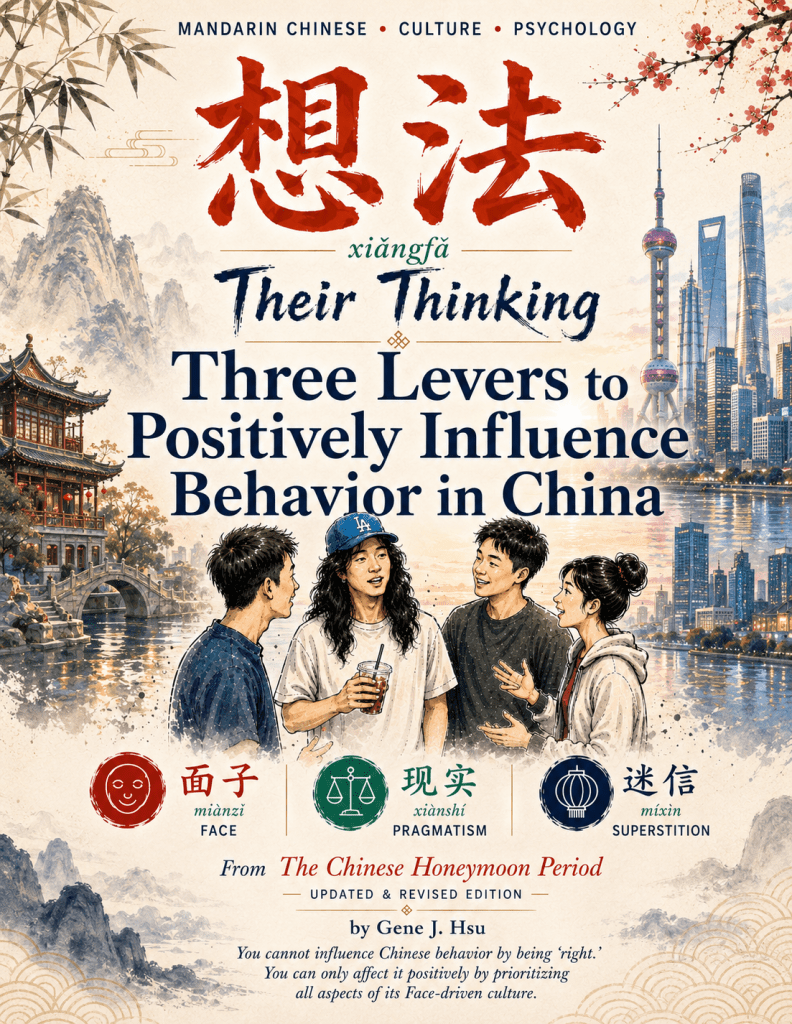
Next, we will examine how Chinese people reconcile ambition and caution—how they pursue their ambitions while appearing restrained, and how Guanxi, pragmatism, and self-preservation coexist without contradiction. Prepare to unravel THEIR THINKING 想法 xiǎngfǎ.
And remember that in China, attitude is not about self-expression. It’s about navigating emotions in a system where Face dominates everything.
And sometimes, the clearest understanding of THEIR ATTITUDE begins by examining your own.



Leave a Reply