
The first of three uniquely Chinese emotions covered in this chapter, 委屈 (wěiqu), is the one most likely to go undetected — because it manifests beneath the cultural facade of always giving Face. Causing it, then letting it fester, is how Guanxi can suddenly break.

Excerpt
Now consider that Chinese people have been conditioned to never forget; a brand of thinking that was indoctrinated into their collective psyche after “one hundred years of humiliation” at the hands of invading foreigners. So it is not uncommon for Chinese people to hold grudges (记仇 jìchóu) across generations, even into the next life, and for this reason, this proverbial off-ramp (台阶下 táijiē xià) is the quintessential tool for getting things done in China.
While different situations require different off-ramps, they all resonate from three main flavors of Chinese-specific emotions: 委屈 wěiqu ➤ feeling wronged, 焦虑 Jiāolǜ ➤ feeling inadequate, 尴尬 gāngà ➤ feeling embarrassed.
委屈 (wěiqu) is an “emotional injury”
委屈 emotions emerge from:
- Feeling wronged or treated unfairly
- Feeling hurt, aggrieved, or misunderstood
What follows is a desire for comfort or validation, especially from family and close personal connections. This emotional injury feels like the ultimate loss of Face, so providing an outlet 出气口 (chūqìkǒu) to dissipate those negative feelings represents the deepest level of Guanxi.
For foreigners, especially those in positions of authority in China, the key is to avoid unintentionally causing these emotional injuries. Avoid direct feedback that might sound like criticism, and adopt a mindset that offers a Face-preserving off-ramp.

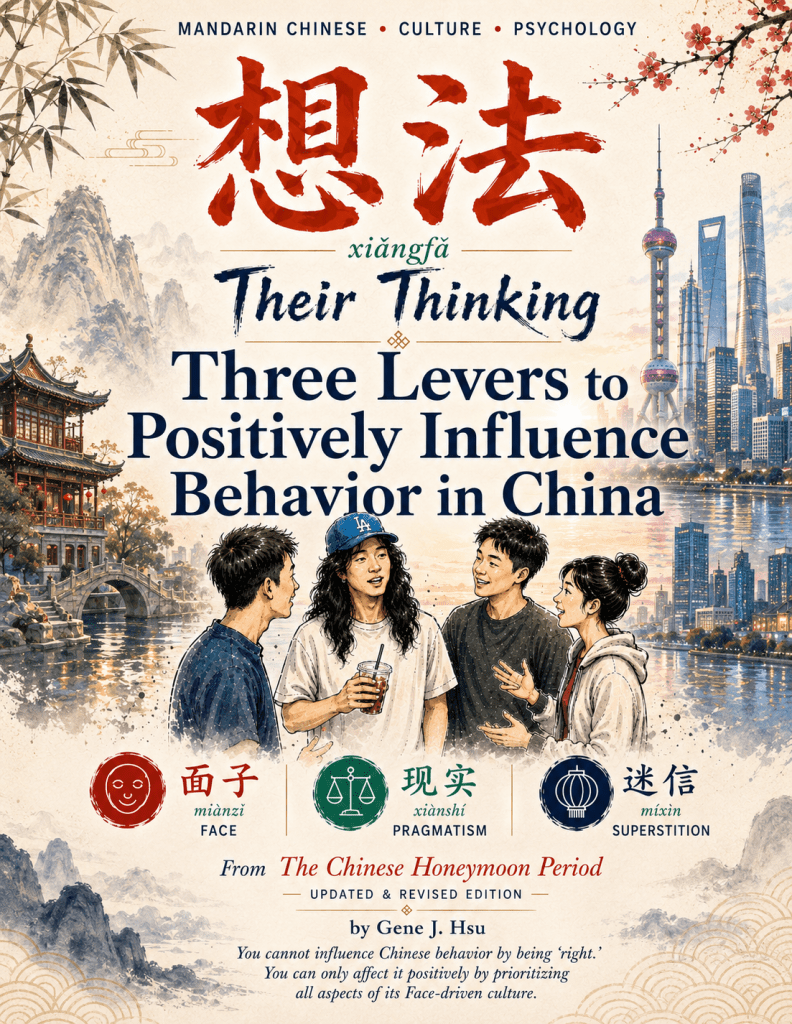
This is an excerpt from PRESERVING FACE: Mastering the Timeless Art of Chinese Rhetorical Interactions, Chapter 10 of The Chinese Honeymoon Period — Updated & Revised Edition. Download the complete chapter, including the full glossary and quick-reference card, free at genejhsu.com/offramp.


Leave a Reply