
What is a blunder?
Blunder is a term commonly used in chess, but it is the most appropriate English word I could find for illustrating the opportunity to give someone a Face-preserving off-ramp.
The noun in this phrase is mistake (错误 cuòwù), but not all mistakes are created equal.
The adjective is 愚蠢 yúchǔn, which means silly or stupid.
Combining them is 犯愚蠢的错误 (fàn yúchǔn de cuòwù) — “make a silly blunder or mistake.”
Most silly and stupid mistakes are unintentional, but they still tend to be embarrassing, and depending on their severity, they may leave lingering feelings of guilt and anxiety.
Giving someone a release valve (出气口 chūqìkǒu or 出气孔 chūqìkǒng) for their anxiety or insecurity is the ultimate goodwill gesture in Chinese culture, perhaps any culture. For strangers, this is the ultimate Guanxi-deepening gesture of goodwill; for your wife, it is expected, and withholding it would have consequences. While this double standard is normal in Chinese cultural psychology, the benefits of extending Face-preserving off-ramps are universal.
Giving Face 给面子 gěimiànzǐ is mostly about what you say to foster goodwill, but enabling others to preserve their Face 给台阶下 gěi táijiē xià includes what you say about yourself, your expectations, and what you are willing to tolerate in relation to the trouble caused.
Simply put, someone does something embarrassing, and it is now incumbent upon your reaction to make it seem cool.
What is the cultural meaning of 台阶下 (táijiē xià)?
It’s the off-ramp extended to help someone preserve Face. In practice, it’s an opportunity to extend a disproportionate amount of goodwill when someone commits a blunder.
We all make mistakes, even foolish ones.
Psychologically, we tend to remember with striking clarity how we were treated in those moments of embarrassment, which, for us, is now an opportunity in Chinese culture when someone else’s blunder is on display.
Should you let someone off the proverbial hook when they commit a blunder or serious mistake, or should you pile on the laughter to the delight of others, shaming as a means to shape behavior?
Answer: You should always let those with whom you have Guanxi, or would like to deepen Guanxi, off the hook, and I created a FREE Preserving Face guide that explains how.
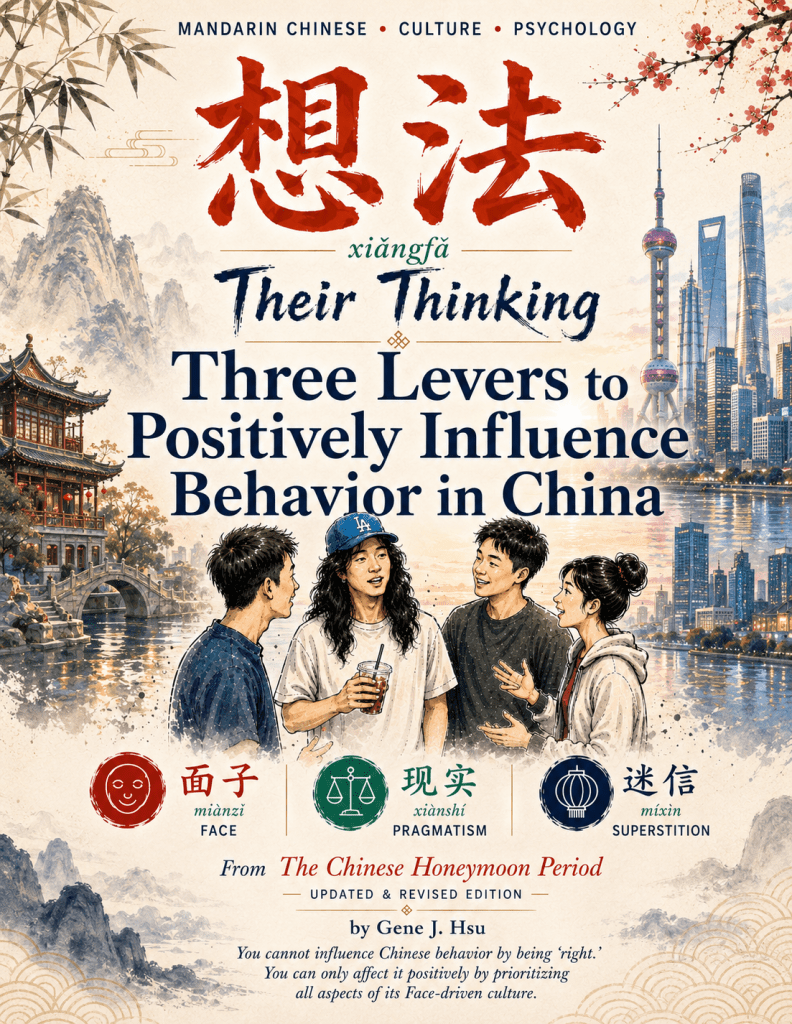
This is the final Chinese cultural concept in The Chinese Honeymoon Period, and we have come full circle to the most counterintuitive aspect of China’s Face-driven culture for most Westerners.
Why should we proactively facilitate allowing someone to preserve their Face following a blunder, 犯愚蠢的错误 fàn yúchǔn de cuòwù, especially one that negatively affects you?
Answer: Because it is an opportunity to extend a priceless gesture of goodwill.
Whether the mistake was done knowingly or accidentally is irrelevant because the opportunity is yours and the potential loss of Face is theirs. In Chinese culture, their potential loss is your potential gain when you offer a Face-preserving off-ramp. It is priceless, and it will be remembered far longer than the effort required to extend it.
The Mindset Adjustment
You didn’t cause the blunder, so you get to decide what happens next.
That’s the part most of us miss. We think Face is something we lose or protect for ourselves, a reputation to manage, a scorecard to monitor. In China, the more valuable move is managing someone else’s scoreboard and quietly letting them score points. 台阶下 isn’t damage control. It’s an investment, and the return shows up later, when you least expect to need a favor.
The next time someone spills the proverbial tea, mispronounces English, or accidentally causes a costly mistake, resist the urge to bring more public attention. Don’t shine a spotlight. Give them a quiet off-ramp instead. It costs you nothing. They’ll remember it forever, and they will be less likely to stumble again in the same manner. That’s human psychology 101.
Preserve Face. Deepen Guanxi. Every time.
PRESERVING FACE (台阶下) is the final concept in The Chinese Honeymoon Period, and maybe the one most worth practicing.




Leave a Reply