

The last of the three emotions, 尴尬 (gāngà), is also the fastest-moving — and the one most within your control to tilt in your favor.
Excerpt
尴尬 (gāngà) is the awkward moment suspended in time
尴尬 is a very specific emotional flavor in Chinese — it means embarrassed, awkward, or socially uncomfortable, usually due to an unexpected situation that feels tense, even inappropriate, leaving everyone not knowing how to respond.
Imagine that you are suddenly at a loss for words, which might be embarrassing in itself. You feel exposed, even silly, like you are losing Face, and there’s palpable tension as everyone feels suspended in an awkward silence. We’ve all been there when we misspoke or attempted a lame joke that no one laughed at. This situation carries a sense of losing Face because social harmony has been disrupted, warranting someone to create a Face-preserving off-ramp.
Again, this moment of social awkwardness creates an opportunity. Specifically, it’s an opening for someone to break the silence with humor. The person who can generate laughter will be labeled as 幽默 yōumò, a light-hearted person that everyone wants to socialize with. I’ve witnessed foreigners in China achieve this label unintentionally when their genuine authenticity ingratiates everyone with laughter. If this happens to you, don’t fight it. Embrace it as a competitive advantage, as you have discovered a superpower in China.
Thought Exercise
Unlike the first two Chinese emotions, 尴尬 isn’t tethered to history, nor is it relative to what someone else has achieved or is treated. It’s spontaneous, and it quickly resolves itself one way or the other. Your opportunity is to resolve it in your favor by giving everyone a Face-preserving off-ramp.
- 委屈 is what festers privately after being wronged by someone with power over you.
- 焦虑 is the quiet, constant pressure of not measuring up.
- 尴尬 is the flash of exposure when something unexpected goes wrong in front of others.
Different triggers, different timelines — but the same remedy. All three can be resolved proactively with a properly delivered 台阶下. Winning Chinese hearts and minds is the endless pursuit of building trust (信任) as they define it, and extending Face-preserving off-ramps is the ultimate tool to reverse their psychological resistance, natural prejudices, and subconscious biases.

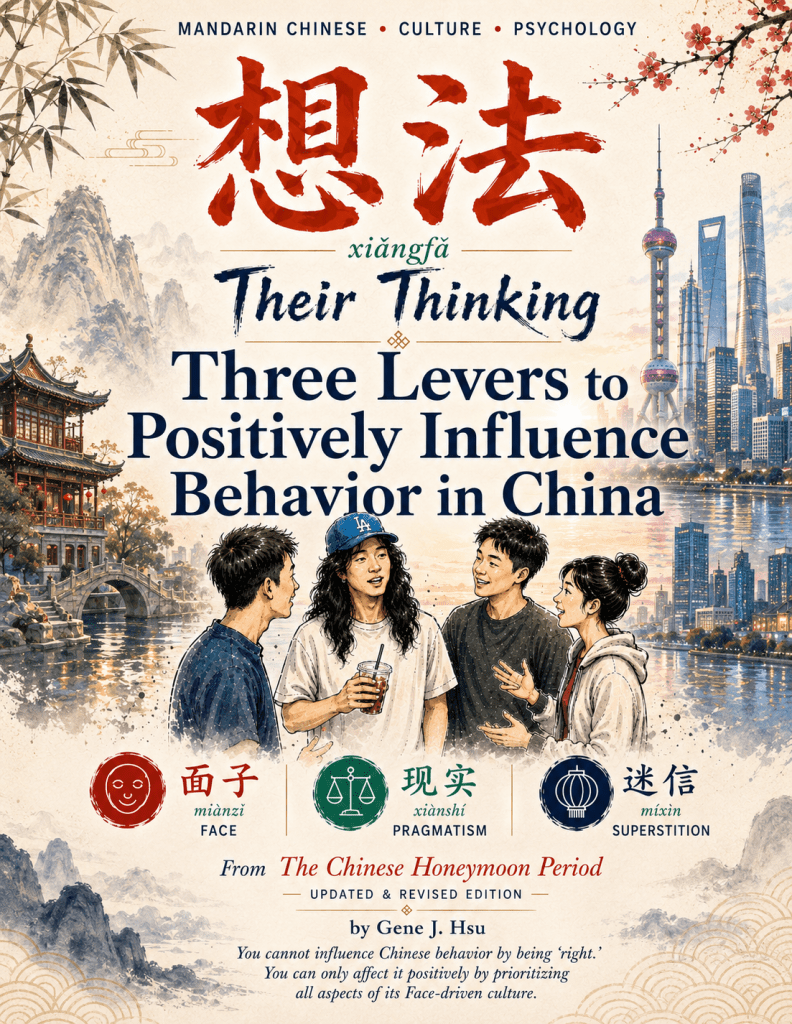
This is an excerpt from PRESERVING FACE: Mastering the Timeless Art of Chinese Rhetorical Interactions, Chapter 10 of The Chinese Honeymoon Period — Updated & Revised Edition. Download the complete chapter, including the full glossary and quick-reference card, free at genejhsu.com/offramp.


Leave a Reply